
Your joints don’t have to slow you down. Here’s what’s really happening — and what actually helps.
Most women over 40 are told stiff, achy joints are just part of getting older. They’re not. There’s a very specific reason it happens — and once I understood it, everything changed.
I want to tell you something nobody told me when I turned 43.
The morning stiffness that takes 20 minutes to ease. The knees that ache after a walk that used to feel effortless. The wrists that complain before lunch. The way you quietly stop doing things you love — not because you decided to, but because your body made the decision for you.
I assumed it was just age catching up with me. My doctor shrugged and said it was normal. So I accepted it.
I wish someone had told me sooner: it’s not just age. There’s a specific biological reason this happens — and there’s something you can actually do about it.
This article is what I wish I'd read three years ago. If you're a woman over 40 and you're noticing changes in your joints, please read every word of this.
First, Let Me Ask You Something
Do any of these sound familiar?

That slow, stiff feeling when you first wake up isn’t something you have to just accept. There’s a biological reason it happens.
You wake up in the morning and your body feels like it needs 20 minutes just to remember how to move properly. You've started avoiding stairs when you can. You used to love hiking, dancing, or playing with your grandchildren — and now you hold back because you know you'll pay for it later. You've tried glucosamine. You've tried fish oil. You've tried resting more. Nothing seems to really work.
If you're nodding, you are not alone — and more importantly, **you are not broken.**
What's happening to your joints has a name. And it's not just "getting older."
The Real Reason Your Joints Change After 40
Here's what most women are never told.
Your joints are surrounded by a thick, gel-like fluid called **synovial fluid**. Think of it as the oil in an engine — it cushions impact, reduces friction, and delivers nutrients directly to your cartilage. Without it working properly, everything grinds.
The molecule responsible for keeping this fluid thick and protective is called **hyaluronan**. And here's the problem: your body starts losing it in your 30s. By your 40s, the loss is significant enough to cause real, daily symptoms.
Stiffness. Clicking. Aching. That feeling of needing to "warm up" just to move normally.
Dr J.R. Levick of St George's Hospital Medical School in London has called hyaluronan **"the guardian of your joints"** — and research published in the Nutrition Journal confirms that people with age-related joint issues have significantly lower hyaluronan concentrations in their synovial fluid than people with healthy joints.
In other words — when that fluid thins, almost everything else follows. And most joint supplements never touch it.
The 7 Things That Are Happening to Your Joints Right Now
1. Your synovial fluid is thinning
As hyaluronan declines, your synovial fluid loses its thick, gel-like quality. Cartilage that was once well-cushioned and nourished becomes exposed and vulnerable. This is the root cause that most supplements completely ignore.
2. Falling oestrogen is making it worse
Oestrogen has a powerful anti-inflammatory effect in joint tissue. As it declines through perimenopause and menopause, joint inflammation increases — which is why so many women notice joint changes in their 40s even without any injury. It's hormonal, not accidental.
3. Your cartilage is being starved
Cartilage has no blood supply — it relies entirely on synovial fluid for nutrients and oxygen. When that fluid thins, cartilage is slowly starved. Small daily wear that your body used to repair overnight starts accumulating instead.
4. Chronic low-grade inflammation has taken hold
This isn't the sharp pain of an injury. It's a slow, quiet inflammation that builds over time — showing up as that heavy, stiff feeling in the morning, or the ache that lingers after a walk. Left unaddressed, it gradually compounds.
5. Collagen production has slowed
Collagen gives cartilage its strength and ability to absorb shock. After 40, your body produces roughly 1% less each year. The result is joints that are less resilient and more susceptible to wear.
6. Your muscles are absorbing less impact
Muscles act as shock absorbers for your joints. As muscle mass decreases after 40 (a process called sarcopenia), your joints carry more of the load with less support — especially noticeable in the knees and hips.
7. Most things you've tried don't address the real problem
Standard glucosamine and chondroitin supplements work on cartilage — but they don't touch the synovial fluid environment. It's like changing one tyre when three are flat. You might feel a little better, but the core issue remains.
Why the Village in Japan Changed Everything I Thought I Knew

Researchers visiting the village of Yuzurihara in Japan found elderly residents still farming by hand into their 80s and 90s — almost entirely free of the joint problems common in Western populations.
Researchers studying a remote mountain village in Japan called Yuzurihara made a fascinating discovery.
The elderly residents — people in their 70s, 80s, and even 90s — were still farming by hand for up to 8 hours a day. They squatted. They bent. They carried heavy loads. And they did it without the joint pain and stiffness that Western populations of the same age consider inevitable.
Genetics? No. Their relatives who moved to cities and changed their diet developed the same joint issues as everyone else.
The difference was their food — specifically, a diet naturally rich in hyaluronan. Their joints were being consistently replenished with the very molecule that protects synovial fluid.
Their joints weren't defying age. They were being fed what they needed.
This discovery is what shifted my thinking completely — and led me to stop looking for pain relief and start looking for something that actually replenishes what's being lost.
What I Found — And Why It's Different From Everything Else
After researching this for months, I came across an ingredient I'd never heard of called **Mobilee®**.
It's a patented, advanced form of hyaluronan — the exact molecule your joints are losing — and it's been studied across 14 randomised, double-blind clinical trials specifically for its effect on synovial fluid, joint comfort, and physical function. Unlike most joint ingredients, the studies showed results that kept improving the longer people took it.
The only supplement I've found that combines Mobilee® with the other clinically-backed ingredients your joints need is **Joint Genesis™ by BIODYNAMIX®**, formulated by Dr Mark Weis, M.D.
Here's what's inside and why each ingredient matters:
**Mobilee®** — replenishes hyaluronan in synovial fluid. The ingredient your joints are actually losing. Backed by 14 clinical trials.
**French Maritime Pine Bark** — its active compounds have been shown to distribute directly into synovial fluid (not just the bloodstream), helping maintain a healthy inflammatory environment right where it matters.
**Boswellia Serrata** — an Indian tree resin extract with strong clinical evidence for reducing joint stiffness and improving physical function.
**Ginger Root** — a published meta-analysis in Osteoarthritis and Cartilage confirmed its effectiveness for reducing joint discomfort.
**BioPerine®** — enhances absorption of all other ingredients so they actually work faster and more effectively.
One capsule a day. No prescription. Made in an FDA-inspected facility in the USA. Free from gluten, dairy, soy, nuts and GMOs.
✦ If you want to skip straight to what I personally take:
I've been taking Joint Genesis™ for several months now. The difference in my morning stiffness alone was noticeable within the first few weeks. I don't overthink it anymore — one capsule, every day.
→ You can read more about Joint Genesis™ and see if it's right for you here
Real Women. Real Results.
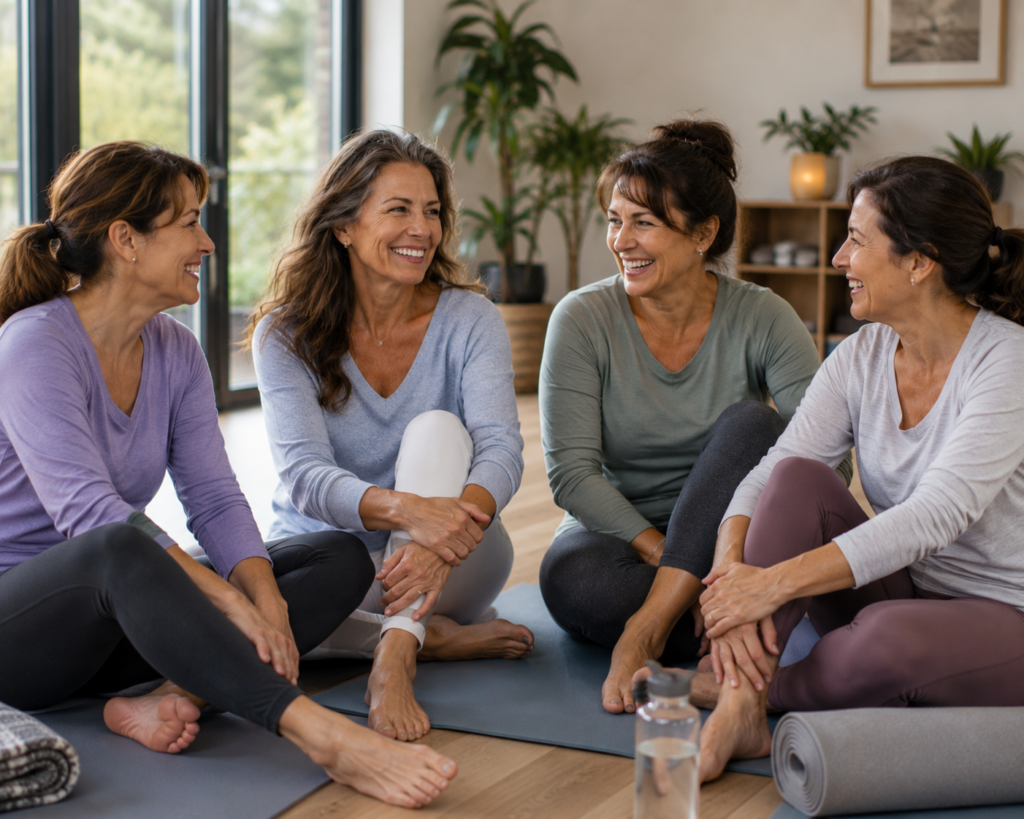
Women who address the root cause of joint stiffness — not just the symptoms — report getting back to the activities they love.
I know what you're thinking — "that sounds great, but does it actually work for real people?"
Here's what verified customers are saying:
⭐⭐⭐⭐⭐
**"I can exercise without feeling stiff afterwards"**
"My power walking sessions are so much smoother now. I've improved my speed, my mobility and my flexibility. I actually look forward to getting out there again."
— Mary M., Michigan
⭐⭐⭐⭐⭐
**"I wake up and my knees don't hurt — that's huge for me"**
"I feel less stiffness overall and it's so much easier to get moving in the morning. Something I honestly didn't think I'd say again."
— Ann J., Wisconsin
⭐⭐⭐⭐⭐
**"A definite game changer"**
"I can do yoga more easily. When I go hiking I'm not stiff afterwards. It takes away the stiffness in my legs in a way nothing else has."
— Roberta E., California
⭐⭐⭐⭐⭐
**"I feel like myself again"**
"I'm back doing the things I love — walking my dogs, swimming, gardening. I feel more confident and more active than I have in years."
— Vanessa M., Florida
Be Realistic — Here's What to Expect
I want to be honest with you because I think you deserve that.
Joint Genesis works at a structural level — it's rebuilding the quality of your synovial fluid, not masking pain. So it takes time.
**Weeks 1–4:** Some women notice early improvements in morning stiffness. Others feel little change yet. Both are normal. The fluid is beginning to shift.
**Months 2–3:** This is where most women notice clear, consistent improvement. Movement becomes easier. Activities that felt uncomfortable start feeling manageable.
**Months 4–6:** The clinical studies showed results continued to improve for the full 6 months. The longer you take it, the more your synovial fluid is restored.
This is why I recommend starting with at least a 90-day supply — and why most women who try it don't stop.
What You Can Do Starting Today — With or Without a Supplement
Whether you decide to try Joint Genesis or not, these habits genuinely help:
**Move every single day, even gently.** Synovial fluid doesn't circulate on its own — it needs movement to do its job. A 20-minute walk lubricates your joints and delivers nutrients to your cartilage. Prolonged stillness is the enemy of joint health.
**Add anti-inflammatory foods.** Oily fish, leafy greens, berries, olive oil, turmeric and ginger all help reduce the low-grade inflammation your joints are dealing with. Diet alone won't fix structural issues — but it creates a much better environment for recovery.
**Protect your muscle mass.** Light resistance training — even bodyweight squats and resistance bands — takes pressure off your joints by rebuilding the shock-absorbing support they've lost.
**Stop accepting it as normal.** This is the biggest one. Joint stiffness and discomfort after 40 are common — but they are not inevitable. The women who feel the biggest improvement are the ones who stopped shrugging it off and started doing something about the root cause.
My Honest Bottom Line
Three years ago I thought stiff joints were just something I'd have to manage for the rest of my life. I tried everything that was recommended to me and felt like nothing really worked.
The difference with Joint Genesis was that it was addressing something completely different from everything else I'd tried. Not the cartilage surface. Not pain signals. The fluid environment that the whole joint depends on.
I'm sharing this because I genuinely wish someone had pointed me here sooner. Not because it's a miracle — it isn't. But because the science behind it is real, the ingredients are backed by proper clinical research, and for me personally, it has made a meaningful difference in how I move and how I feel every day.
If you're tired of just managing symptoms and want to try something that works differently, I'd encourage you to take a look.
What I personally take and recommend:
**Joint Genesis™ by BIODYNAMIX®**
The only formula I've found that directly targets synovial fluid with clinically-studied ingredients. Formulated by Dr Mark Weis, M.D. Made in the USA. One capsule a day.
If you've been struggling with joint stiffness, morning aching, or reduced mobility since turning 40 — this is where I'd start.
→ Click here to learn more about Joint Genesis™ and see today's pricing:
Have you noticed joint changes since turning 40? What's helped you most? Share in the comments below — I read every single one. 👇
Disclosure: This article contains affiliate links. If you purchase through these links, I may earn a small commission at no extra cost to you. I only recommend products I have personally researched and believe in. This article is for informational purposes only and does not constitute medical advice. Please consult your healthcare provider before starting any new supplement. Individual results may vary. These statements have not been evaluated by the Food and Drug Administration. This product is not intended to diagnose, treat, cure or prevent any disease.