Affiliate Disclosure: This article contains affiliate links. If you purchase through these links, we may earn a commission at no additional cost to you.

Do You Wake Up Feeling Stiff, Sore, or Less Flexible Than You Used To?
You’re not imagining it.
Many women over 40 notice that simple activities start feeling different. Getting out of bed, climbing stairs, taking a long walk, gardening, exercising, or even carrying groceries may not feel as effortless as they once did.
The truth is that your body naturally changes with age, and your joints are often one of the first places where those changes become noticeable.
But here’s the encouraging news: joint discomfort isn’t something you simply have to accept as part of getting older.
By understanding what’s happening inside your body and taking proactive steps today, you can support mobility, flexibility, and the freedom to enjoy an active lifestyle for years to come.
Let’s explore the 7 most common reasons your joints feel stiff after 40—and what you can do to move with greater comfort and confidence.
Looking for extra support for your joints? These are the supplements many women over 40 are adding to their daily routine to help support mobility, flexibility, and comfort.
Reason #1: Natural Collagen Decline
Collagen is one of the most important proteins in your body. It helps support healthy joints, cartilage, tendons, ligaments, and even your skin.
After 40, collagen production naturally begins to decline. As a result, joints may feel less flexible and everyday movement may become less comfortable.
What You Can Do:
- Eat protein-rich foods
- Stay physically active
- Support collagen production through proper nutrition
Small steps today can help support long-term mobility and everyday comfort.
Reason #2: Reduced Joint Lubrication
Healthy joints rely on synovial fluid to reduce friction and help your body move smoothly.
As we age, the production of this natural lubricant can decrease, making joints feel stiff, especially in the morning or after sitting for extended periods.
What You Can Do:
- Stay hydrated
- Keep moving throughout the day
- Avoid long periods of inactivity
Looking for Extra Support?
Many women are adding Complete Joint Care to their daily wellness routine as part of their commitment to healthy aging.
Designed to support mobility, flexibility, and overall joint comfort, Complete Joint Care may help you continue enjoying the activities that make life meaningful.
👉 Discover Complete Joint Care Today
Reason #3: Loss of Muscle Mass
After age 40, muscle mass naturally decreases.
Because muscles help support and stabilize your joints, weaker muscles can place additional stress on your knees, hips, and lower back.
Over time, this can affect balance, movement, and overall comfort.
What You Can Do:
- Include strength training 2-3 times per week
- Stay active with walking, yoga, or Pilates
- Prioritize protein intake
Building strength today can help you stay active, independent, and confident tomorrow.
Reason #4: Chronic Inflammation
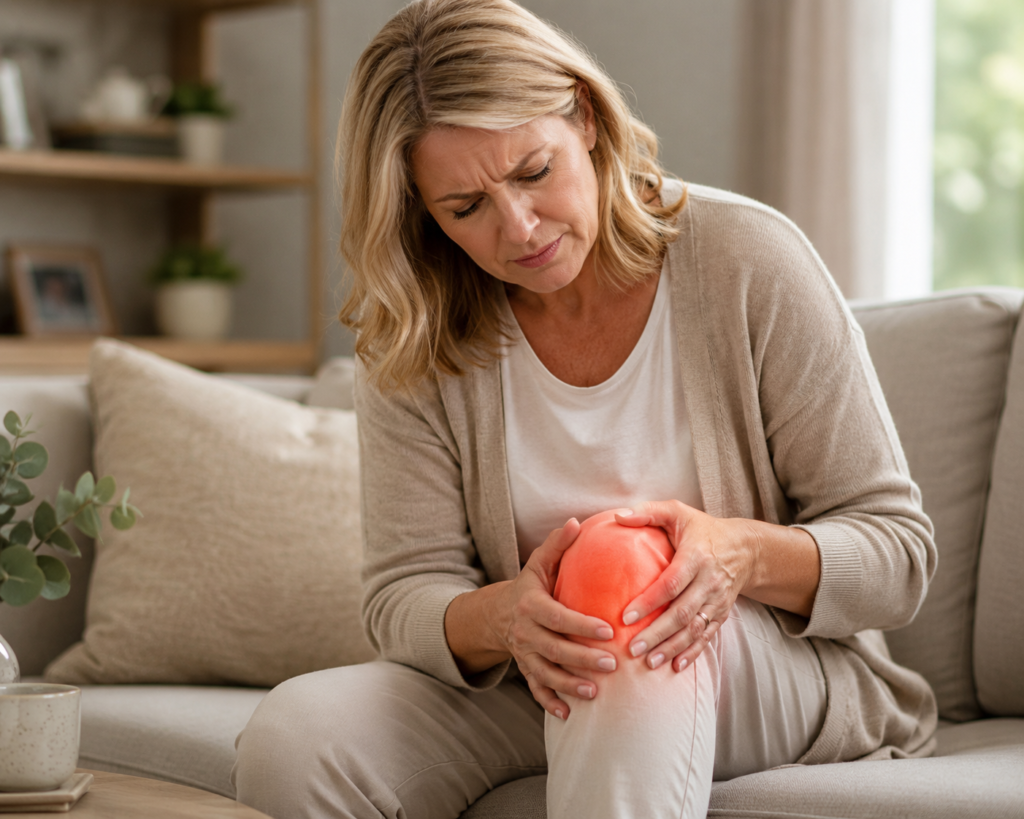
Inflammation is one of the most common causes of ongoing joint discomfort.
Poor nutrition, stress, lack of sleep, and a sedentary lifestyle can all contribute to inflammation throughout the body.
Many people don’t realize that their daily habits may be affecting how their joints feel.
What You Can Do:
- Focus on whole foods
- Reduce processed foods and sugar
- Prioritize quality sleep
- Manage stress through mindfulness and exercise
The healthier your lifestyle, the better your body can support healthy joints.
Quick Joint Health Check
| Symptom | Possible Cause |
|---|---|
| Morning stiffness | Reduced joint lubrication |
| Aching knees | Cartilage wear |
| Reduced flexibility | Collagen decline |
| Joint discomfort | Inflammation |
| Joint weakness | Muscle loss |
If several of these sound familiar, it may be time to give your joints extra attention.
Reason #5: Poor Nutrition
Your joints depend on key nutrients to function properly.
Without enough vitamins, minerals, and healthy fats, your body may struggle to maintain flexibility, mobility, and overall joint health.
Joint-Friendly Foods:
- Salmon
- Avocados
- Leafy greens
- Berries
- Nuts and seeds
A nutrient-rich diet doesn’t just support your joints—it supports your energy, vitality, and overall wellness.
Reason #6: Extra Weight

Even a small increase in body weight can place significant pressure on weight-bearing joints such as the knees, hips, and ankles.
Over time, this added stress may contribute to discomfort and reduced mobility.
The goal isn’t perfection—it’s creating healthy habits that support long-term movement and wellbeing.
What You Can Do:
- Focus on balanced nutrition
- Walk regularly
- Incorporate low-impact exercise
- Stay consistent with healthy lifestyle habits
Every step toward a healthier lifestyle can help support stronger, more comfortable movement.
Reason #7: Hormonal Changes
Hormonal changes during perimenopause and menopause can affect joint health.
Many women notice increased stiffness, reduced flexibility, and joint discomfort during this stage of life.
These changes are common, but there are ways to support your body through the transition.What
You Can Do:
- Stay active
- Prioritize sleep
- Eat an anti-inflammatory diet
- Consider supportive supplements
Supporting your body during hormonal changes can help you continue feeling your best.
Join thousands of adults who are making joint health a priority.
Could Your Joints Use Extra Support?
Imagine:
✔ Walking comfortably
✔ Traveling without discomfort
✔ Playing with grandchildren
✔ Staying active and independent
✔ Enjoying life without worrying about stiff joints
Don’t let joint discomfort hold you back from living the life you love.
Join thousands of adults who are making joint health a priority.
Healthy joints can help you continue living the lifestyle you love.
They’re about maintaining the lifestyle you love.
That’s why many women over 40 are adding Complete Joint Care to their daily wellness routine to support mobility, flexibility, and everyday movement.
👉 Discover Complete Joint Care and Take the First Step Toward More Comfortable Movement
Final Thoughts
Joint stiffness after 40 is incredibly common—but it doesn’t have to define how you live.
By making simple lifestyle changes, staying active, eating well, and supporting your joint health consistently, you can help maintain mobility, flexibility, and confidence as you age.
Your best years aren’t behind you.
With the right support, they may be just beginning.
👉 Discover how Complete Joint Care can become part of your daily wellness routine.